

 Career news
Passion, motivation, enthusiasm: Anna Szakonyi and Jonas Pangerl – Two Professionals from the Audi Revolut F1 Team
Career news
Passion, motivation, enthusiasm: Anna Szakonyi and Jonas Pangerl – Two Professionals from the Audi Revolut F1 Team
2026. 01. 16.
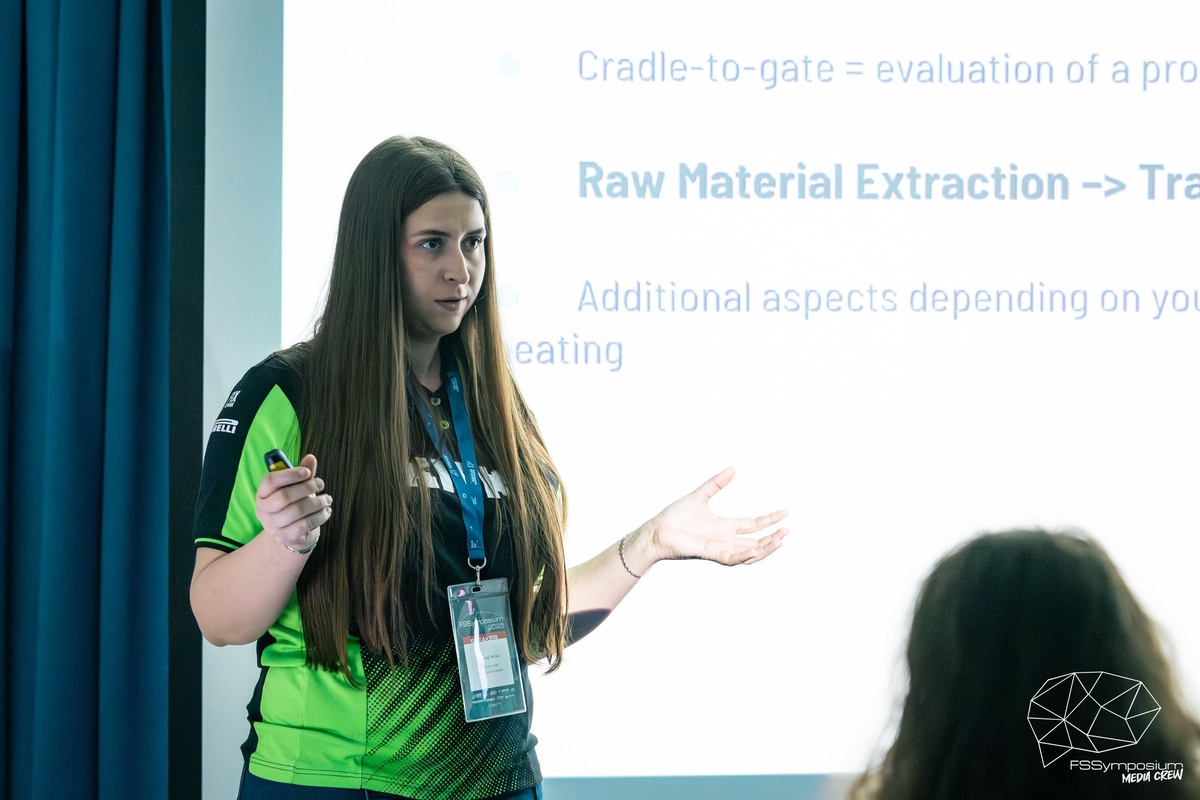
The Formula Student Symposium was held once again last year with the support of Audi Hungaria, welcoming students involved in race car development from around the world for the eleventh time at Széchenyi István University in Győr. More than 250 young participants from nine countries attended the symposium, where members of teams competing in the Formula Student series—who also had the opportunity to learn from one another—listened to professional lectures delivered by internationally recognised engineers and leading representatives of motorsport and the automotive industry. Among the speakers were Anna Szakonyi and Jonas Pangerl, both professionals from the Audi Revolut F1 Team.
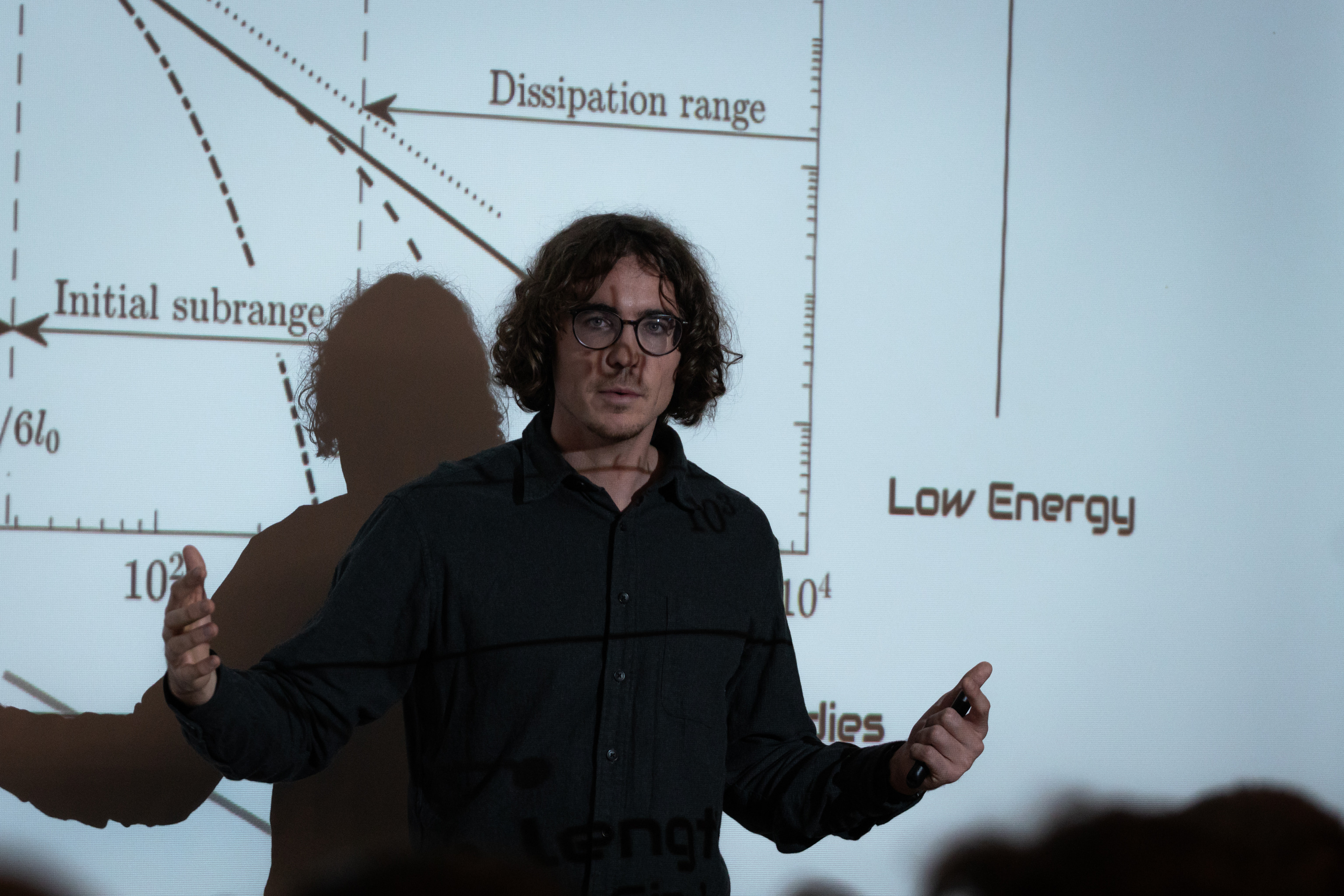
Jonas Pangerl: I am working in the Aerodynamics department, specifically in the CFD (Computational fluid dynamics) subteam where I am responsible for the correlation between the CFD simulations and the wind tunnel and track tests. My team develops the CFD simulations that are then used by the aerodynamicists to develop the external shape of the car. We focus on improving the accuracy and the efficiency of the simulations to allow the aerodynamicist to better understand the flow field around the car to make better decisions in their design process. I am specifically working on improving the accuracy of the simulations to match the results we get mainly from wind tunnel test. This involves understanding the flow field, any sources of modelling errors and the strategies that are used to model the flow in a virtual environment. With that understanding I try to modify the simulation setup and process to achieve results that align with reality.
 How did your career path lead you to this position? Did you gain any Formula Student experience during your university years?
 Jonas Pangerl: I studied mechatronics with focus on mechanical engineering in my bachelor’s at the university of applied sciences Esslingen, Germany. During my bachelor’s degree I realized that I have a strong interest in aerodynamics, fluid dynamics and coding. I started in the Formula Student team “Rennstall Esslingen” in the aerodynamics department during my bachelor’s thesis. For my masters, I decided to stay at the same university but switched to mechanical engineering. There I specialized in fluid dynamics, mathematics and CFD simulation. During my master’s I stayed in the Formula Student team and became aerodynamics team leader in my second year. My first season was a very painful experience as the car was brand new and did perform very poorly. But it was a great learning experience and so we developed a new concept for the next season which worked very well and we won the Formula Student competition in Germany in the combustion class. After this successful season, I stepped back as aerodynamics team leader as I had to focus more on my studies, but kept working in the aerodynamics subteam for the next season where we improved the successful concept from the year before, making it the most successful car of the universities formula student team by winning Formula Student Germany again, together with winning other competitions and subsequently leading the formula student world ranking list in 2021. During the formula student event in Spain 2019, I got judged by a person working at Williams Racing who offered me an internship (student placement) after. I started in October 2020 with Williams Racing for a 1-year internship. After that, I did my master’s thesis in the CFD department of Williams Racing with the topic “High Fidelity CFD simulation of a Formula One wing and wheel configuration”. After that, I got offered a job at Williams as an Aerodynamicist and worked there till June 2023. Already in my first year in FS (formula student), in 2018 I visited the Formula Student Symposium (FSS) in Gyor. Me and my teammates enjoyed it a lot, so we returned in 2019. After I started at Williams, I participated in 2022 for the first time as a speaker at the symposium, talking about Aerodynamics in Formula Student and Formula One. In 2024, I attended as a speaker with the same topic as 2025. This makes it five visits in total to the symposium, two as visitor (student) and three as speaker. Formula Student allowed me to make my way into F1, without this would have never happened.
 What message would you share with students who dream of working in Formula 1? What career guidance or advice would you give them?
Jonas Pangerl: First, I would not advise anyone to aim for a career in Formula 1. It is very unlikely to end up there if we consider all the people worldwide that would like to work in F1 and how limited the positions are. Getting a job in F1 is a consequence of your interests, motivation and work you put in during university and any side projects you do. There are many jobs similar to what we do in F1 and if you are interested in working on a specific topic, you will also enjoy your work when it is not Formula 1. Maybe even more, Formula 1 is heavily restricted by the regulations and limits what can be done compared to any other industry. But there are ways to heavily increase the chances of getting into F1. You need to stand out from all the other people that have the same dream and work/ study in a similar field as you. Grades should be good, but usually this is not too important, and you would rather focus on other areas where you can gain knowledge as well. Participate in FS or any other project that you find interesting at your university. Learn about what you are doing there, try to discover new technics or strategies that make the project stand out. It is not enough to just participate, you should try to improve what you find when you join, discover areas that can be improved and that allow some novelty that you can shine with. This will come almost naturally when you enjoy what you are doing and spend a lot of time working on the project. From my experience it does not work if you try to force something, it must come and grow naturally.
Jonas Pangerl: Passion, motivation and enthusiasm to discover new things and put work into it. You will likely be working more than in a comparable job that is not motorsport and therefore you should really enjoy what you are doing. F1 is not necessarily the pinnacle of the profession. This depends on the area you work in. In some, the restrictions by the regulations force you to use some technics, ways of working, materials, resources and to be very efficient in any regard that could hinder you in doing everything to absolute perfection and state of the art or beyond. In other areas, F1 is truly the pinnacle.
 Anna, your journey took you from Zalaegerszeg first to Vienna, then to Győr, while at the same time leading you to the Hinwil headquarters of Sauber Motorsport. In shaping your life path, and particularly in your transition from an economics-focused background to engineering, what role did Formula Student and Audi Hungaria play?
Anna Szakonyi: I was studying at the Vienna University of Economics and Business when I learned that there was also a Formula Student team in Vienna. I joined immediately and went on to play a central role in the team’s activities for three years.During my time with the team, I decided that I wanted to acquire deeper technical knowledge, which is why I applied to the Audi Hungaria Faculty of Vehicle Engineering at Széchenyi István University. The theoretical foundations I gained there, combined with the practical experience acquired through Formula Student, together provided the background and way of thinking that later proved crucial in enabling me to succeed in the world of Formula One.
Anna Szakonyi: I currently work as a junior project manager at the Audi Revolut F1 Team. My primary responsibilities involve the planning, scheduling, and monitoring of projects related to the car’s floor assembly. I support engineers and production planners in ensuring that development activities progress on time, with the required resources in place and appropriate priorities set.
Anna Szakonyi: I wouldn’t say that this was always my goal. Although I do have childhood memories of watching motorsport, my career initially developed in a completely different direction. Over time, however, my interest in this field gradually grew, and Formula Student proved so engaging that this ambition became increasingly clear to me.
Anna Szakonyi: I think that from the outside it is difficult to fully imagine just how fast-paced and dynamic this work is, but broadly speaking it is what I expected. In many respects it matches what I had envisioned, although experiencing the day-to-day intensity from the inside has still been fascinating. I do not yet have a fully defined long-term plan; for the time being, my goal is to remain in this position, continue to develop professionally, and deepen my understanding of the world of Formula 1.
Anna Szakonyi: I would encourage students to gain as much practical experience as possible. Student programmes offer excellent opportunities for this. They are where you truly learn how to work in a team, take responsibility, and face situations that will later arise in the workplace as well. Events, such as the Formula Student Symposium are also important because they enable students to build professional networks and seek advice from many recognised experts. Whether it concerns race car development or the direction of their future careers, such feedback is extremely valuable and usually provides a tremendous source of motivation.
Some of the photos (nr.: 1 and 3) were provided by the István Széchenyi University. Photographers: Gréta Zsigmond and Liliána Hozián.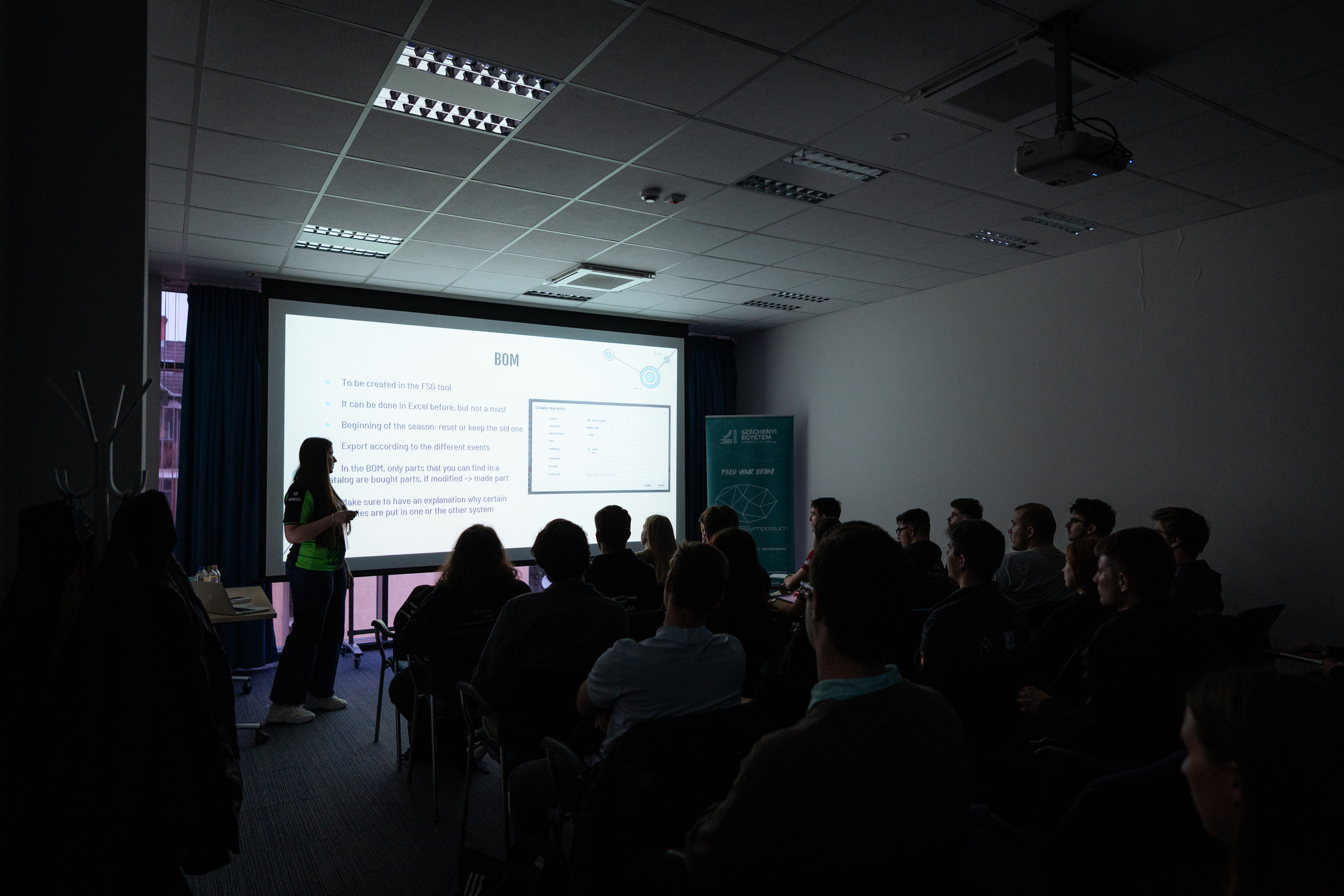
Address
9027 Győr, Audi Hungária út 1.
Phone
+ 36 96 66 8888
E-mail
You can read our current news on the News page.
If you need further information concerning our press materials, please, contact our colleagues at the Corporate Communication Department.