

2026. 03. 10.
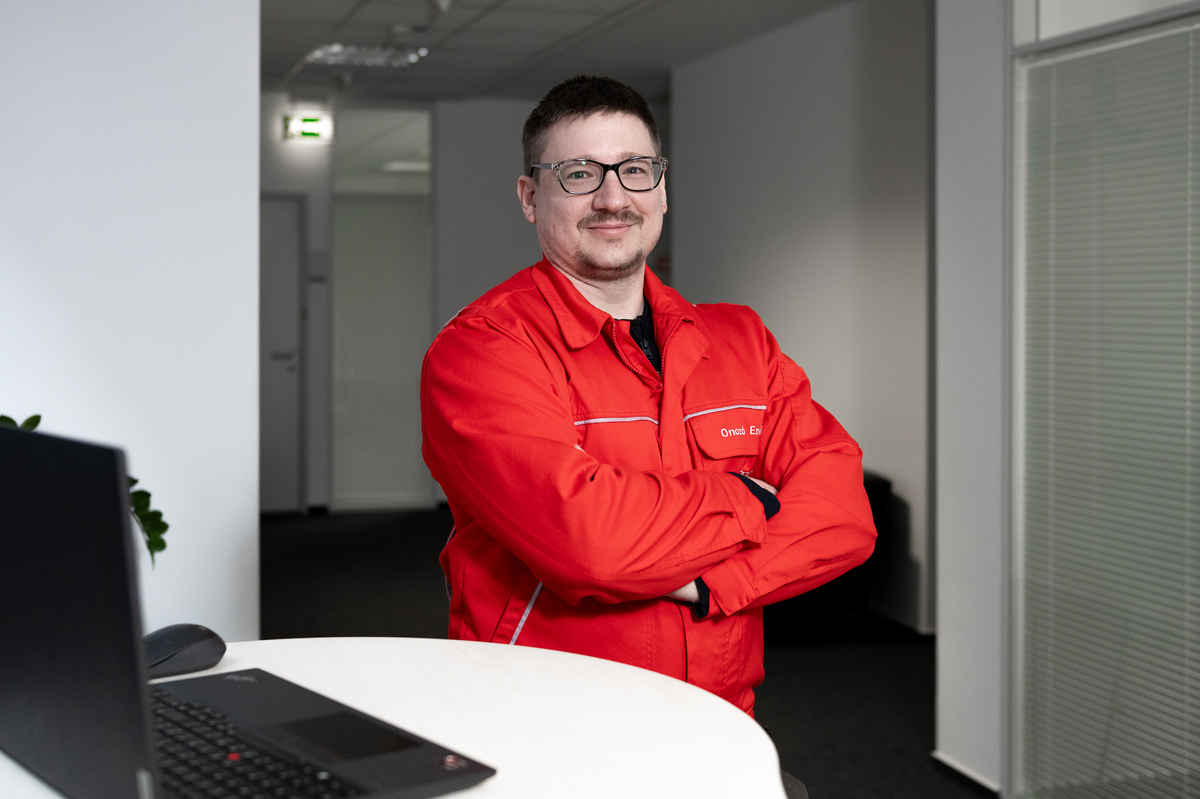
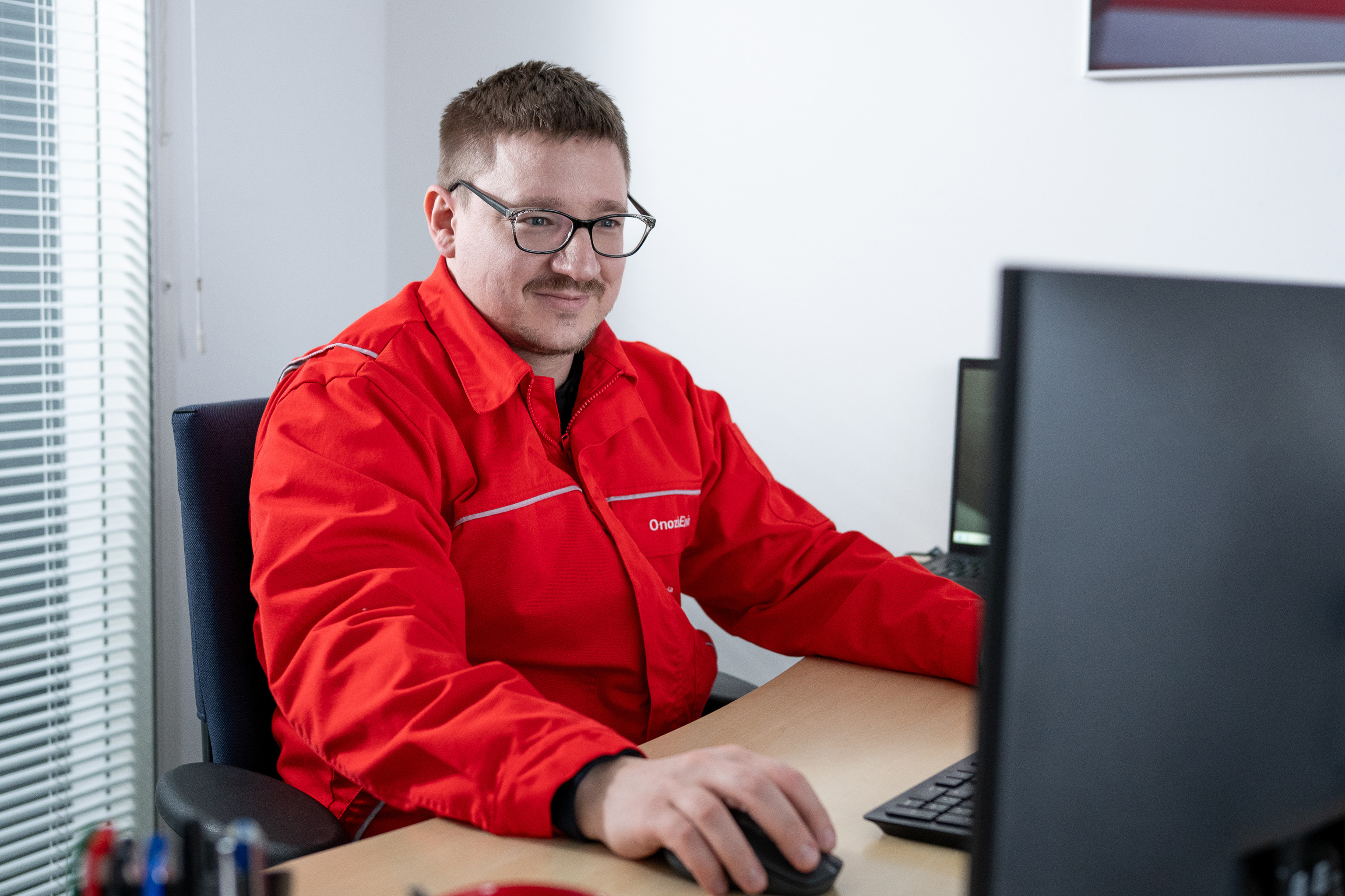
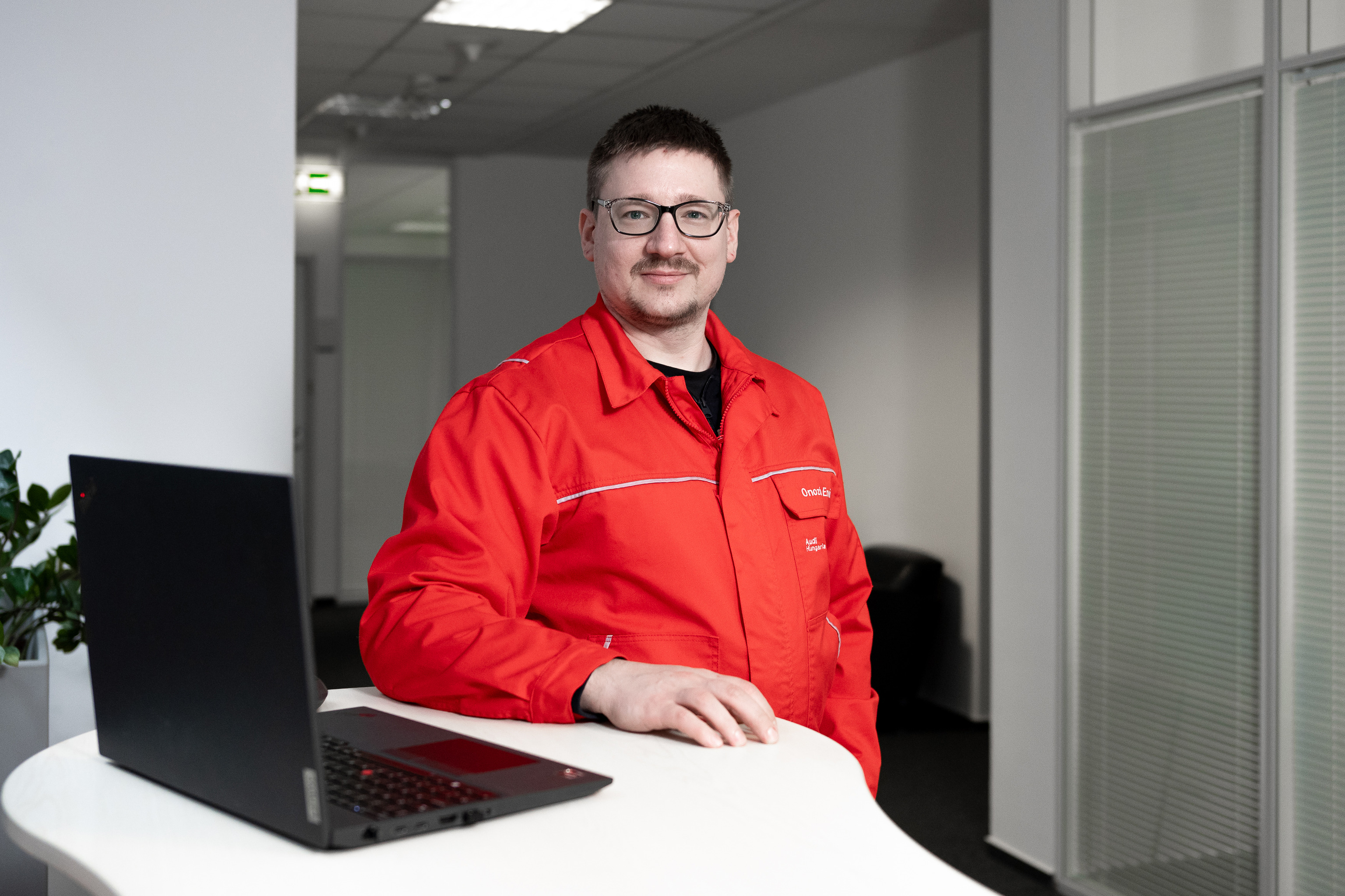
Curiosity led him to a career in physics, and today the same curiosity helps him look behind the latest technological solutions – whether they involve digital services or drones. Ervin Onozó, patent attorney at Audi Hungaria, encounters innovative ideas every day and ensures that the company’s technological expertise receives adequate protection. His position simultaneously requires technical understanding, legal precision, and strategic thinking – and it is precisely this complexity that makes his work truly exciting for him.
I was working at a smaller international company and in the past I had also worked at a law firm, but I prefer working directly with inventors and being part of an industrial environment. I was also curious about the IP processes of a large automotive corporation, which made the patent attorney role at Audi Hungaria especially attractive to me.
With a background in physics, it isn't exactly obvious that one becomes a patent attorney. However, it is no secret that having a degree in a natural science or engineering field is essential for patent professionals. After finishing my studies at the University of Szeged, I gained some initial experience in industrial property consulting, which I enjoyed very much. From there, becoming a patent attorney was a natural next step.
I became a physicist because I wanted to understand how things around me work. In intellectual property, I get to know many different technological solutions, which is something I find especially interesting. Although most of these technologies are far removed from physics, they are not far removed from what originally made me become a physicist. My curiosity can be fully satisfied here as well.
My answer is clearly yes, because as a physicist I understand technological solutions very well, which is a significant advantage when evaluating technical inventions.
 What are the key tasks and responsibilities of your work?
The essence of my profession is ensuring patent protection for new inventions. This starts with processing the invention disclosures submitted by employees. I participate in the decision-making process, during which we also conduct a novelty search. The goal is to determine whether the invention meets the requirements of patentability. A basic criterion is that it must be new and involve an inventive step. After that, we prepare the patent application and submit it to the patent office, where the examiners decide whether a patent can be granted to the invention.
Since patent applications are filed internationally, official representation in each country is handled by local patent attorneys who are authorized to act there. We work closely with them throughout the procedure. As a Hungarian patent attorney, I can directly represent cases before the Hungarian Patent Office.
I carry out my daily work primarily on behalf of AUDI AG as part of the SCC activities. The division of work between the patent attorneys is based on technological fields. I am responsible for inventions related to cloud based digital services, certain autonomous driving functions, health and vital functions of vehicle occupants, and drone technology. Additionally, I handle “other” intellectual products that do not fall under any specific technical category and often do not even qualify as inventions.
Furthermore, invention disclosures submitted by the employees of Audi Hungaria first arrive at my desk. If I find that production related disclosures are worth pursuing toward a possible patent, I guide them through the process described above. I forward inventions related to vehicle and powertrain development to the responsible patent attorney at Audi AG.
Fundamentally, it is a technical solution to a technical problem. A scientific discovery, a business model, a mathematical method, or a computer program cannot be considered an invention. However, in addition to tangible devices and components, a manufacturing, measuring, or control process can also be an invention – even if executed by a computer program – provided that it produces a technical effect.
Due to the significantly different and often annually changing IP strategies of the various companies in the corporation, considerable differences can arise in how many patent applications each company files. However, the process itself is essentially the same; our company’s regulations also follow the corporate guidelines. Only minor differences result from the distinct legal frameworks of the two countries. As an interesting note, while inventor compensation has been part of Hungarian law for roughly two decades – with detailed guidelines issued only a few years ago – Germany has had detailed legislation governing inventor compensation for over 65 years.
 How can you combine your technical/scientific background with legal, administrative, or strategic tasks?
Physicists learn at university what abstraction means: how a system or process can be described in different ways and then choosing the appropriate description to achieve the desired results. In my case, the technical/scientific information is to be analysed in a patent-legal ruleset and then the company’s current strategy defines, along with an administrative framework, what actions are to be taken depending on the results of the analysis. With all of these taken into account, I can utilize my analytical thinking in my everyday work.
One of my hobbies is playing board games, where I must think within unique rulesets to achieve optimal results. Patent work is just like that. It is fascinating to discover a technical novelty and then to redefine it according to the legal framework. It requires a lot of finetuning and mental effort, which I truly enjoy.
I am bound by confidentiality, but I can say that the inventions cover a very wide spectrum, and some have made me smile. I also receive inventions related to business solutions and health, but the most imaginative ideas come from the field of drones, where inventors truly have a solution for everything.
Keeping up is essentially built into my daily work. In my field, I expect exciting patent challenges related to digital solutions and artificial intelligence. More broadly, I foresee particularly interesting inventions in electric drivetrains, batteries, and autonomous driving.
Address
9027 Győr, Audi Hungária út 1.
Phone
+ 36 96 66 8888
E-mail
You can read our current news on the News page.
If you need further information concerning our press materials, please, contact our colleagues at the Corporate Communication Department.
