

2026. 09. 21.
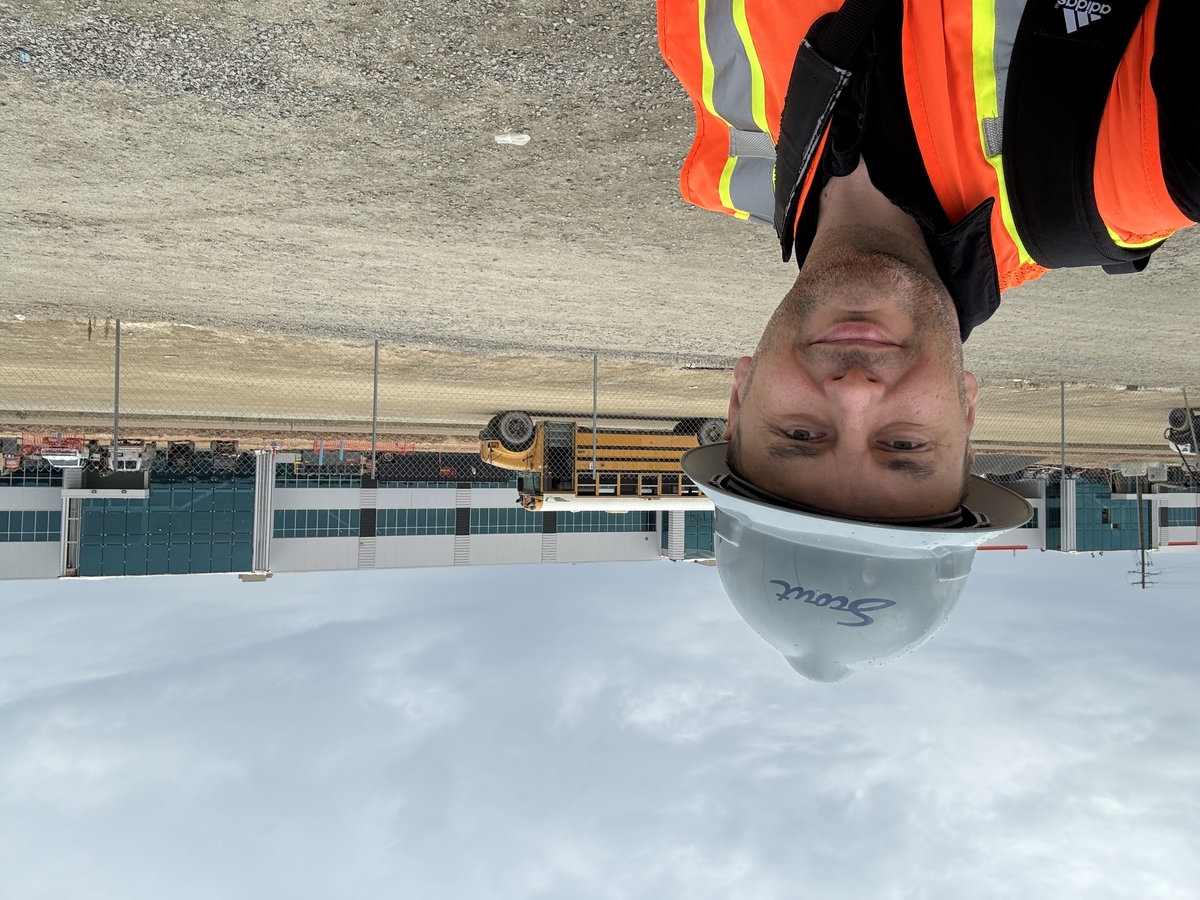
Known at Audi Hungaria as a guardian of quality costs, Richard Sipos later made a lasting impact in the Meisterbock field in both Győr and Ingolstadt. Today, he is embracing a new challenge in the United States.
Starting from Jedlik Ányos Technical School and continuing through the Mechanical Engineering studies at Széchenyi István University, my path naturally led to Audi Hungaria. In 2001, I applied for and was accepted into the company's internship program. The experience went so well that by mid-2002 I became a permanent employee.
Since I had chosen quality assurance as my specialization at university, I completed my internship in that area and continued working there afterward. For five years, I was involved in quality management systems and internal audits, serving as what I like to call a "guardian of quality costs."
I remained in quality assurance, but I wanted to work on more tangible topics. In 2007, I became a team coordinator in the CKD area. We were responsible for the packaging quality of engines and engine components shipped to overseas customers, including complaint management.
Four years later, I was looking for a new challenge and joined the then newly established vehicle plant, specifically the Meisterbock department, where exciting tasks in metrology and geometry awaited me. Soon afterward, I was assigned to Ingolstadt.
I changed positions in August 2011, and by October I was already at Audi headquarters, learning and implementing the processes needed for the start of vehicle production in Győr in 2013. Our work focuses on ensuring harmonious fit and finish between components so that by the end of the pre-series phase they meet all specifications and customer requirements.
My first international assignment lasted eight months. Although both the new topic and the Bavarian dialect presented a challenge, our efforts were successful. By the launch of Audi A3 Sedan production, we had successfully established a comprehensive metrology process in Győr.
In 2015, after the successful launch of four major projects in Győr, including the A3 Sedan, A3 Coupé, TT and TT Coupé, Audi A4 production was ramping up in Ingolstadt. At that time, a personnel change created an urgent need, and I was selected to step in. The colleague who had trained me had left the department, so I returned to Ingolstadt and spent nearly two years there performing the same work I had previously done in Győr.
When I returned to Audi Hungaria, production of the previous Q3 generation was ramping up, and I participated as a specialist in optical analyses. Although I worked on several projects and in different roles, the fundamental nature of my work remained unchanged until February 2026.
 What happened then?
I embarked on a three-year assignment in the United States.
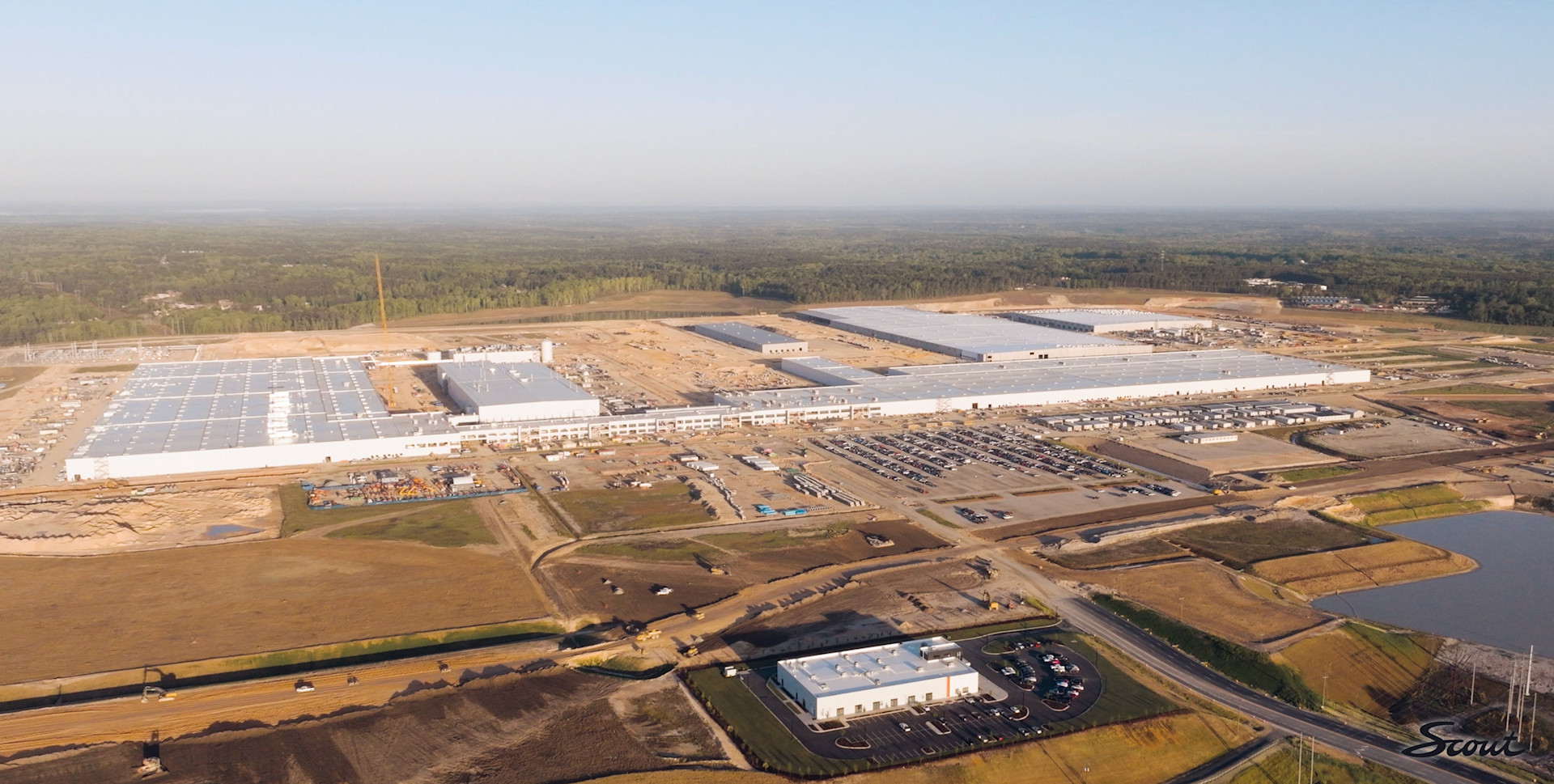
Last spring I noticed a vacancy for a Meisterbock specialist at the new Scout Motors plant under construction in South Carolina. Scout Motors is an American company backed financially by Volkswagen and plans to bring a new generation of electric SUVs to market while preserving the brand's traditional character.
Professionally, it was the opportunity to help build a Meisterbock department from the ground up as part of a greenfield investment. Back in Győr, I participated in a similar project as a newcomer. This time, equipped with more than a decade of experience, I wanted to face comparable challenges again.
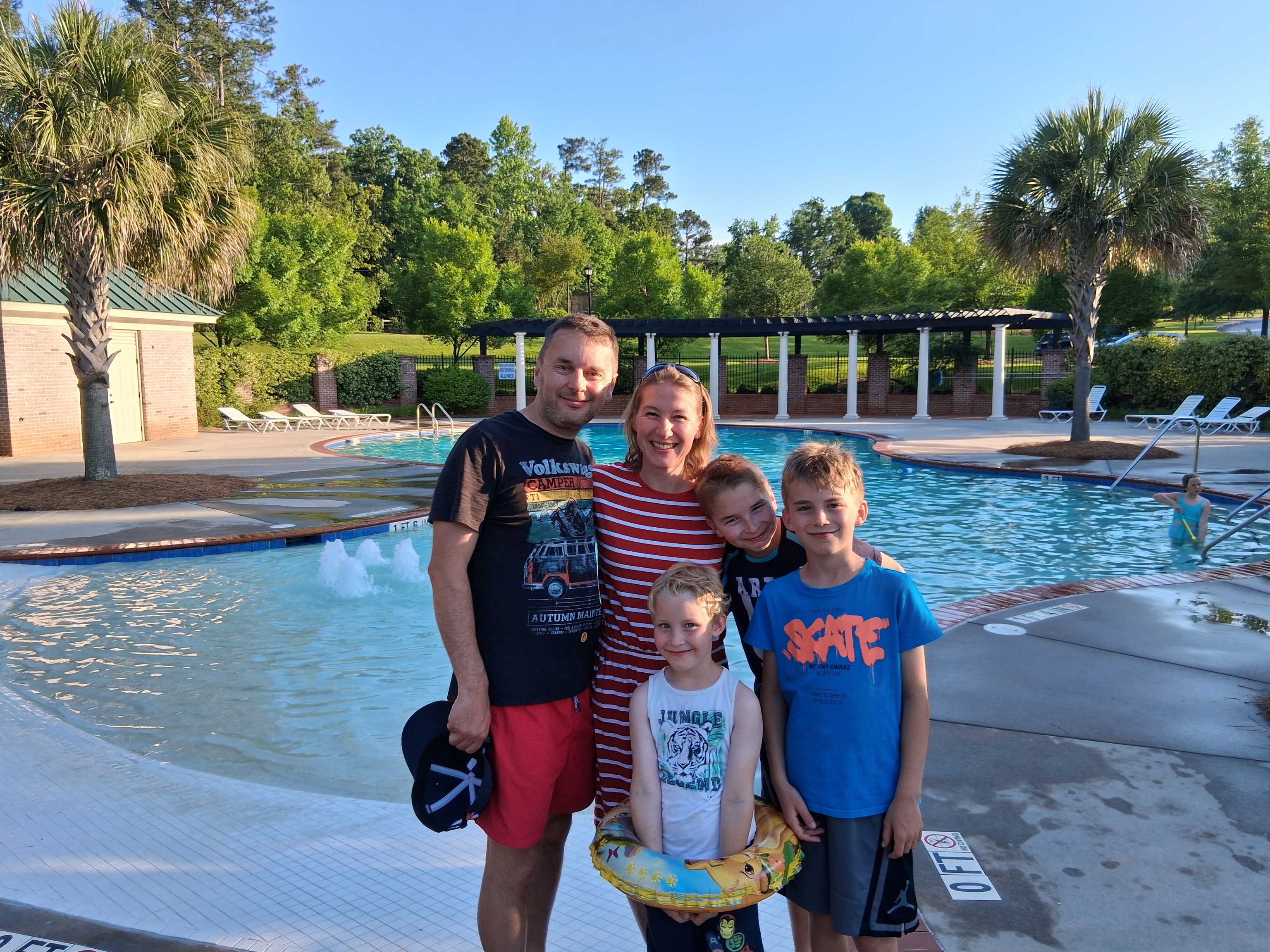
As a father, I was also attracted by the opportunity it provides for our sons, aged 6, 10 and 12, to learn English by attending school in the United States.
Without exaggeration, they were already looking forward to my arrival. We had been in regular contact since my selection and were essentially working together in a consulting capacity almost every week.
I was immediately accepted into the team. My colleagues helped us tremendously and showed remarkable patience. Our first two months after arriving in February were largely spent overcoming bureaucratic hurdles. Without the support of our American colleagues, it would have been much more difficult.
This experience also demonstrated the so-called "Scout spirit." Although team members joined from various automotive manufacturers, everyone quickly adopts the mentality that we are all pulling the same rope in the same direction.
Audi Hungaria employs well over 10,000 people, while our current workforce numbers around 1,500. Even when production volumes increase, the site will likely remain below 5,000 employees.
This has a major impact on workplace culture. Scout Motors is an American company with American management, although many Volkswagen processes are being adopted. However, some established VW processes do not function in the same way within a smaller organization.
A key element of the company culture is the "Scout Way," which could be summarized as: "We'll figure it out, we'll make it work." This philosophy guides the development of new processes.
Our department covers a wide range of activities. We oversee geometric quality control for body shop products, including series measurements. We are also responsible for Meisterbock processes and the qualification of component dimensions and fit.
This includes all visible exterior and interior components. We carry out three-dimensional geometric measurements to ensure perfect fit and finish by the time the vehicle reaches series production.
Our third major responsibility is geometric vehicle analysis, which focuses on identifying and analyzing geometry-related quality deviations on vehicles coming off the production line. We investigate fit-related issues and recommend solutions for manufacturing.
At present, our department consists exclusively of specialists. In the future, we will be responsible for training new experts and engineers who will take over these processes. I should also note that aligning European and American quality expectations will likely be a significant challenge.
Absolutely. Until now, my focus within body manufacturing did not include interior components. Now it is time for me to "sit inside the car," so to speak. And I am happy to do so.
A new plant, new people, and processes that are still being developed present excellent opportunities for further growth.
Around 2020, the metrology team in Győr established a level of cooperation with the Ingolstadt tool shop that was unique among Audi production sites in terms of efficiency.
The collaboration around optical measurements and data analysis began during my time in Germany. Its success was based on mutual trust, equal partnership, and confidence in each other's measurement results and assessments.
What makes me especially proud is that this partnership continues successfully to this day.
Our department covers a wide range of activities. We oversee geometric quality control for body shop products, including series measurements. We are also responsible for Meisterbock processes and the qualification of component dimensions and fit.
This includes all visible exterior and interior components. We carry out three-dimensional geometric measurements to ensure perfect fit and finish by the time the vehicle reaches series production.
Our third major responsibility is geometric vehicle analysis, which focuses on identifying and analyzing geometry-related quality deviations on vehicles coming off the production line. We investigate fit-related issues and recommend solutions for manufacturing.
At present, our department consists exclusively of specialists. In the future, we will be responsible for training new experts and engineers who will take over these processes. I should also note that aligning European and American quality expectations will likely be a significant challenge.
My strongest motivation is using my experience and professional network to support the work of my department as effectively as possible.
There are always new technical challenges and new forms of collaboration that require adaptation. However, whenever teams follow agreed responsibilities, processes and strategic directions, the result has consistently been successful projects.
An American manager once summed it up perfectly:
"Be humble, but make your voice heard. Seize your opportunities, but always take responsibility for your actions and your words."
Another important aspect is understanding that the adjustment process requires significant time, energy, and patience from every family member, though not necessarily in the same way.
Creating a balanced family life and a stable support system is a major challenge, one that must largely be solved independently despite support from both the sending and receiving companies.
Only after several months could we say that all of us had truly settled in. For that, I owe immense gratitude to my wife, Krisztina.
Although both of us work for Audi and have previous international assignment experience in Europe, life overseas is completely different. The cultural differences, diversity, and different mindsets can never be fully understood in advance, nor can the challenge of managing the time difference with family and friends back home.
 How do you spend your free time and what have you explored so far?
We live in Lexington, near Columbia, the capital of South Carolina. The Scout Motors plant in Blythewood is about a 40-minute drive away.
Although Columbia has a population comparable to Győr, its urban structure is entirely different because it covers a much larger area. If you want to go anywhere beyond your immediate neighborhood, you need a car. Public transportation is virtually non-existent, apart from school buses, which are a tremendous help for families.
The boys are enjoying both their school experience and learning English. They especially enjoyed our trip to Charleston on the Atlantic coast, where we visited the USS Yorktown, an aircraft carrier that served in World War II and is now the centerpiece of Patriots Point Naval & Maritime Museum.
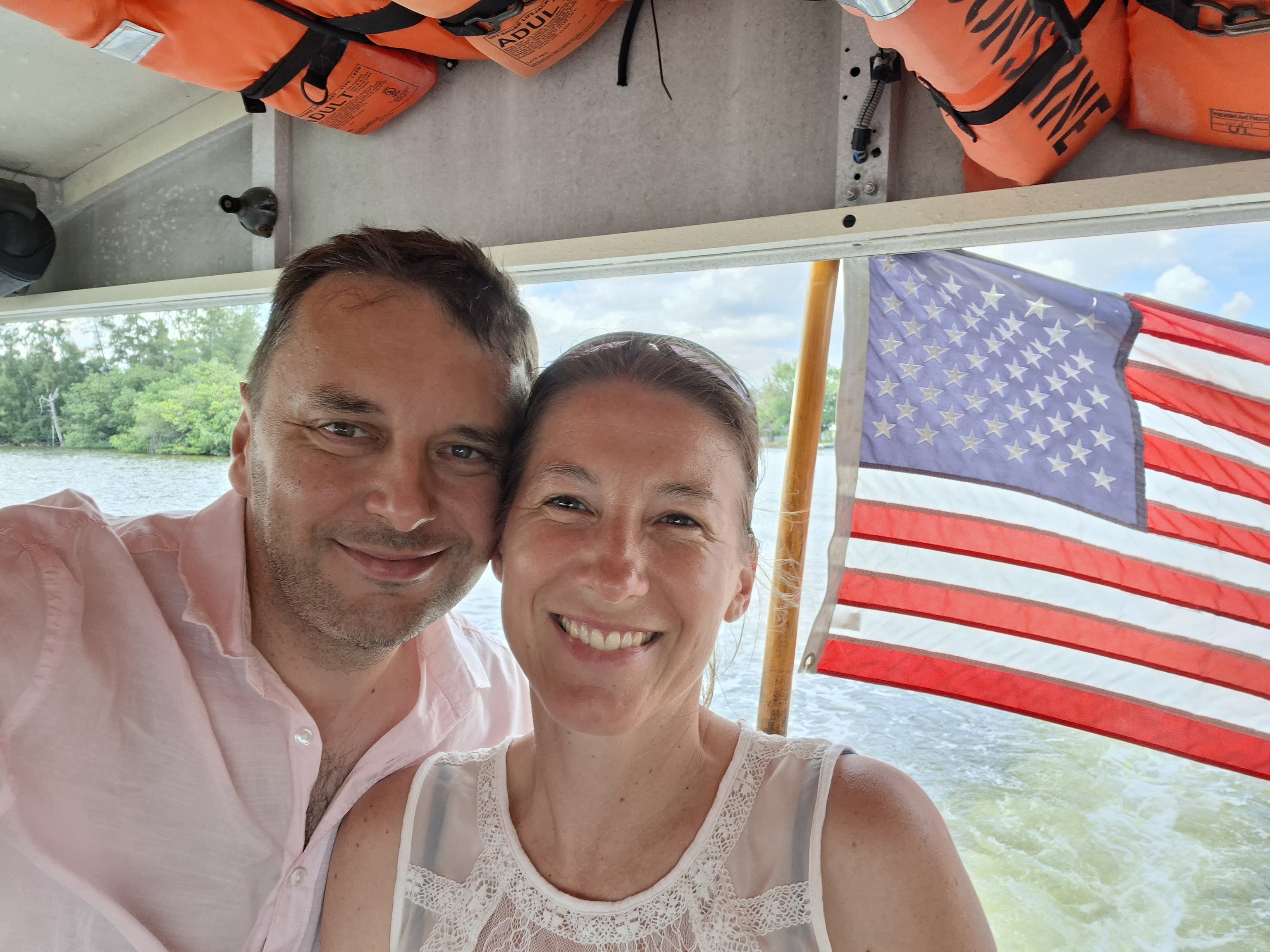
Florida was also a must-visit destination. As nature lovers, we enjoy exploring parks, lakes, and natural areas whenever possible.
Bread and homemade pálinka.
Fortunately, bread is less of an issue because baking is one of my hobbies.
Of course, we also miss our relatives, friends, and familiar activities. Back home I often practiced archery, and my wife and I frequently played squash. Squash is almost unknown here, but recently we discovered a small hidden squash club.
At the same time, I am trying to familiarize myself with sports that are popular in the United States, such as baseball and golf.
Most likely not until next summer.
The distance is one reason, but we also do not want to interrupt the children's language-learning progress. Their English is improving rapidly, and we prefer investing in additional lessons here rather than frequent trips home where they might lose momentum.
The pleasant winter weather here is another factor. To be honest, we are not particularly eager to exchange it for the cold winter back home.
That is difficult to answer right now.
An international assignment is an extraordinary opportunity, but with three school-aged children it requires careful preparation. At the same time, it provides experiences and life lessons for every family member that simply cannot be replaced.
It is something that has to be lived and experienced firsthand.
Address
9027 Győr, Audi Hungária út 1.
Phone
+ 36 96 66 8888
E-mail
You can read our current news on the News page.
If you need further information concerning our press materials, please, contact our colleagues at the Corporate Communication Department.
